
www.dragoart.com
Piracy is not new by any means. It's been around since boats have sailed the ocean blue, with the earliest documentation dating back to the 14th century BC. The most famous pirates are, of course, the pirates of the Caribbean, and they were sailing around from about 1560 to 1720. There has even been government-supported pirating thinly veiled as "privateering." All in the name of plunder and booty.
But scallywags and parrots are no longer the defining characteristics of pirates these days. There is new booty to be had, and a different ocean to "surf."
I'm talking about internet piracy.
This still isn't a new subject, but it is still a relevant one. Are there any gamers out there? Even if you aren't, you might remember this one game that was released fairly recently:
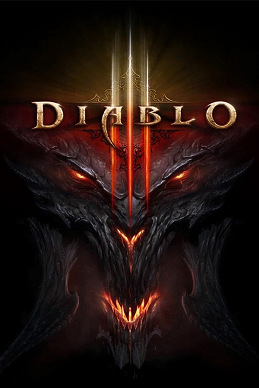
http://en.wikipedia.org/wiki/Diablo_3
Those who did play Diablo might remember something like this:

http://gametyrant.co
Diablo 3 could be played either single player or multiplayer, but either way, users had to connect to the servers in order to play. At the 12:01 am release, how many Diablo 3 players tried to connect? All of them. For the first couple of weeks the servers were constantly crashing. So even those who wanted to play by themselves had to be online.
Wait, a game that you could play by yourself, but you had to be online to do so? What's up with that?
Piracy is what's up.
Blizzard isn't the only company to make a game always online. EA recently released a new SimCity which is also an online-only game. While traditionally single player, the new SimCity adds some exciting multiplayer options, but even those who want to manage a city by themselves need to connect to a server to play. Requiring a connection to the server in order to play garuntees that the player has a legitimate copy of the game and that they didn't get the game from their "anonymous internet friends." Cracked.com wrote an article about how this will be the future of gaming, all in the attempt to curb internet piracy.
It's easy to dismiss piracy as stealing (see Exodus 20:15), but not everyone thinks this way. Exhibit A:

www.twininfite.net
It's not breaking into somebody's house and stealing their entire CD collection, so what's the big deal? I'm not actually taking anything. Another couple considerations in piracy. Let's say a game or desired item X is super expensive. You don't have the money at the time, so you download it somewhere. You weren't going to buy it anyway, so the company isn't "losing" a sale. Maybe you'll buy it when it goes on sale or when the price drops. Again with games, what if one looks good, but you aren't sure? Instead of just passing over, you download it, play it for a bit and discover you like it, then go and buy it. In this case, isn't piracy actually helping the industry by functioning as a demo?
Music is another popular pirating target. A quick Google search reveals a variety of opinions. Some "studies" show that pirating actually helps artists make money, while other "studies" show that pirating is hurting the music industry. Some say it hurts the label, but not the artist (and the artist is the one they actually want to support anyway). Some artists are ok with pirating, since they know people don't always have the money (I personally saw this on the front of a torrent website - an artist encouraged people to download his album and support him if they could, but if not it wasn't a big deal).
What if you go to a friend and borrow his/her copy of Product X? Rip the CD, play the game, or the like? Borrowing in this regard almost never comes across someone's conscience as evil or lawless, but doesn't it effectively do the same thing? Deprive the producer/artist/developer/etc. of money? After all, you aren't buying Product X again. But why is this ok when getting it from random people over the internet isn't?
This isn't meant to be an argument for or against piracy, necessarily. I do hope to bring some more questions to the table and (hopefully) provoke some thinking on this topic. With the many "reasons" or justifications for pirating, it isn't as simple of a matter as labeling it as stealing and walking away. At least, not if you want to have any kind of meaningful interaction with the subject.

Good job Brad. I think this issue is not discussed enough.
ReplyDeleteA few things have happened with online content. One, it's hard to know when you are sampling and when you are stealing--my rule of thumb is asking, "am I avoiding a purchase?" If I can buy it I will; if it's content I can't find anywhere, I will go ahead and get it.
Second, the music industry has fundamentally changed. People will not get as rich as they used to.
Great thoughts!
I understand that much of piracy is simply making copies, but its the intellectual property that is being stolen. Many times I have seen what someone else is doing on their farm and replicated it. Does that mean I have stolen their idea? Not legally since it is never patented, but morally did I steal property, albeit intellectual? If I build a chair have I stolen the first chair-builders IP? Interesting topic for sure.
ReplyDeleteIs piracy like trying to say you just borrowed someone else's words so you are not plagiarizing? If you quote or borrow an intellectual idea from someone it is right to give them credit. If they have created a game or produced a song it is right to let them earn money from said song. If I can't afford it I don't need to play it or should be content to just play it at a friends house. This is good to discuss but when you struggle to get your homework posted to the net, stealing something from the net would no doubt be an accident.
ReplyDelete