Thursday, May 2, 2013

To Name Or Not To Name


What is in a name? For individuals our desire is to have someone hear our name and associate with it good character qualities. Companies desire that customers think of quality and service when they hear their name or see it written on a bill board. Churches also desire to have their communities see them in a good light as a place that loves, serves and cares about people. Along with this comes a desire to be known as a place of truth. The question today concerning our church name concerns the importance of denomination and the placement, or lack there of, on the churches name. Should we be known as “Rocky Road Baptist Church” or would it be better as simply “Church of the Rock?” For some removing the denominational association is equal to denying the faith. What are we going to do next, let a woman be the pastor? Are we ashamed of being so and so church? Do we still believe the Bible? It is interesting to me that folks associate denomination with theology and doctrine. Oh I understand that seeing a denominational association immediate tells you certain things about their beliefs but this is usually only for the believer not those who do not attend church. I have also made assumptions about a congregation because of their denomination only to find they were totally different from the norm.

I believe if we are really seeking to win the lost we should be more concerned with being seen as Christian rather than Lutheran, Baptist, Pentecostal or whatever other label we may hold. Those who already attend should know what the congregation and pastor believe and from what platform they may build those beliefs on without having to confirm it on their sign. Visitors, especially if they are already believers will figure out quickly what kind of church you are and know if they are in agreement. Visitors who do not know Christ need first to know you love them regardless of where they are or where they come from and that God loves them too. This is not to say that denominational names on a sign create automatic positive or negative associations. What it is a call to is an honest evaluation of what it is we really want to promote. Is it Christ and the gospel or an association? If we can do both effectively then by all means go forth and conquer, but if not which one will we make the trump card?

Thursday, April 18, 2013

Oz The Great and Powerful


I must admit, I was never a huge fan of the Wizard of Oz. I know it's all classic and whatnot, but it never had much appeal. I don't know if it's because my sister made me watch it, or because the main character was a girl and I didn't want cooties by association. Needless to say, I haven't seen the "original" (as it turns out, there are several Oz films, but it looks like the 1939 rendition was the most popular) for a goodly while, but I was pretty excited to see Oz The Great and Powerful. Probably had something to do with this silly stage magician tangling with witches who could throw fireballs. Classic underdog story.

I have plenty of movie critic friends who have many things to say about this movie. Something about character arc and other things that need to be explained to me. I don't really pay attention to that kind of stuff, but I do look at some of the moral statements of the movie. The main character is a magician, so sleight of hand and lying is kind of his thing. But he's an outright con-man. Without giving too much of the movie away, let's just say that this character flaw is pretty much the source of every unfortunate thing that happens to him throughout the movie.

But is it also his saving grace? When does it become acceptable to use lies, trickery, and such deceit? The wicked witch threatens open war with a peace-loving people, and only the mighty "wizard" can save them. But all he has are parlor tricks. Will he - or can he and should he - trick his way to victory? There really is quite a bit of ingenuity that goes into this plan they concoct. They don't have any standard soldiers, so they need to make due with what they have.

Obviously, it would have been best if Oz wasn't so deceitful from the very beginning. He could have saved himself a lot of heartache. But when push comes to shove, how much "evil" can we bring to the table for the "greater good?" It creates a bit of a quagmire when Oz needs to save a people he endangered, but he really only has a single set of skills to work with.

The question at the end of all of this is: when does lying become acceptable?

Tuesday, March 26, 2013

My Sin & Amazing Grace

I removed my post after realizing that I had written about the very thing a fellow classmate had written on earlier. There is no excuse for my mistake and I take full responsibility for it. In its place I will seek to share my heart concerning another topic that I had given thought to but was unsure I was ready to write. This error on my part though has opened the door, unplanned as it was, for me to address it.

Over the last fifteen plus years of being a pastor I have made many mistakes. While many were never earth shattering others left scars for myself and others that we as a congregation had to work through. Many of these mistakes were what we could call rookie because they came from a lack of experience that if learned from brings wisdom. Some mistakes were because of personal short comings that I had to take to the Lord and with the help of others seek to overcome in my life. The point I want to make here is that mistakes that involve sin are our own. No one including myself can pass the responsibility off on someone else for their own sin. Neither are we allowed, according to scripture, to declare our sin as not hurting or involving anyone else.

This is why it is so important that we address sin for what it is. When I did something that would be considered sin I confessed it to the board or the church so that forgiveness could be given and received. This is what I have tried to share with those in the congregation who have fallen in sin. There is no sin that only effects me. When we are saved we are brought into a family Christ says, a living body, according to Paul and because of this we are interconnected. If one member does something good we are all blessed and this is easy to celebrate. However when one of us does wrong the desire is to run or demand our rights to be individuals without any responsibility to the whole. What we don't realize is that it is in owning our sin and confessing it that we find peace and forgiveness.

Not long ago two friends of mine left their wives and families. My heart was broken not only over the sin but over the fact that there was no desire on their part to own their sin. We have not yet come to see the distance the ripples in the pond will go. While on one hand love demands me to carry out the slow but purposeful process of discipline, love also moves me to reach out to them as friends. While one has allowed me to do this with honesty the other cannot see this as love. Redeemed individuals are not free from temptation or the giving into this temptation. This is why we receive from God the words of 1 John 1:9. If we, children of God, confess our sin He is faithful to forgive it. The key here is confession which is the process of first owning our sin and then acknowledging that God declares it sin. David humbly confessed that He had sinned against God and begged for forgiveness. While God's grace forgave him, this same grace allowed the cost of that sin to be realized in David's family.

If judgment is to begin with the church then we must deal with our sin before we go out to deal with the log in someone else's eye. If we truly believe God's word then we must be willing to hold it up as truth even when it exposes us. When we are willing to confess our falling short then the world may be more open to hearing where they fall short. Sin cost, which is why God gave His Son to pay the cost. This truth must be established first so that grace which is freely given to all who confess can be seen as truly amazing.

Tuesday, March 19, 2013

The Walking Dead

If anyone reading this has not checked out this show yet, I would recommend at least watching the first episode. Being on the edge of your seat from the first minute, the thrill that comes with it, the suspense of what may or may not be happening, it's worth at least a first take from the episode (It's on Netflix if you have that).

 An AMC original series, I thought nothing of it when I first started it. I got the reaction, from family and friends, that I just gave to you. Amazing, must see. However, it is hard to get into with a 6 month old in your arms at home. Eventually, I got into during nap time, and began wishing naps were longer. For those of you who are sitting there "Oh, this is just another series trying to take advantage of the whole living dead (vampires, zombies) fad" you will surely be mistaken. Or at least in my opinion.

To start out with, the show, is about a zombie apocalypse. The main character, Rick, is a small town sheriff somewhere outside Atlanta. Before the disease takes hold, Rick is shot and put into a coma, where he is left in the hospital when the dead start to walk. Left there to die, he wakes a couple months into the outbreak and goes in search of his wife and son. Sadly (or at least I think so) he finds them by episode two (or was it three?) just outside of Atlanta, after some in their group of survivors save him in the city limits of Atlanta. Well, lets say they all save each other to get out of the city and back into the camp.


However, I am going to skip to Season 3. Watch to catch up. In the last episode I have seen (there has been a few aired since then), there is breaking point that I see. Two brothers are reunited (pictured above). That got separated from the very first episode. Rick and the main group, wont let the new found brother (who was originally part of the main group) back into the main group. His brother, still part of the main group, wants him back in. There is fighting, mostly yelling, between Daryl (one of the brothers) "he is MY family" and Rick "WE are your REAL family here, the ones that take care of you, look after you, care and tend for you." In the end of this scene, Daryl walks away with Meryl (his brother), leaving the group for his blood relations.

And this brings me to Jesus and my walk with my Christian family. Yes, they may not be my blood family, but they are my family. They are the people that take care of me, look after me, feed me. All of this, not only physically, but they do this spiritually as well. And spiritually is what is important, especially in times of apocalypses. When all is said and done in the apocalypse (whenever it comes), if there is no rapture and I am left here on earth during the tribulation period, I want to be walking with my brothers and sisters in Christ. The ones who look after and feed me spiritually to survive the harsh time.

I look at the Walking Dead as a time like that, and Daryl's decision as one we all have to make. Will we choose our family that has taken care of us through the tough and hard times, or will we venture out with the unknown and step away from Christ and the care that he provides?

Wednesday, March 13, 2013

Piracy

www.dragoart.com

Piracy is not new by any means. It's been around since boats have sailed the ocean blue, with the earliest documentation dating back to the 14th century BC. The most famous pirates are, of course, the pirates of the Caribbean, and they were sailing around from about 1560 to 1720. There has even been government-supported pirating thinly veiled as "privateering." All in the name of plunder and booty.

But scallywags and parrots are no longer the defining characteristics of pirates these days. There is new booty to be had, and a different ocean to "surf."

I'm talking about internet piracy.

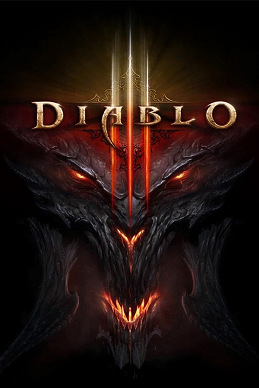
This still isn't a new subject, but it is still a relevant one. Are there any gamers out there? Even if you aren't, you might remember this one game that was released fairly recently:

http://en.wikipedia.org/wiki/Diablo_3

Those who did play Diablo might remember something like this:

http://gametyrant.co

Diablo 3 could be played either single player or multiplayer, but either way, users had to connect to the servers in order to play. At the 12:01 am release, how many Diablo 3 players tried to connect? All of them. For the first couple of weeks the servers were constantly crashing. So even those who wanted to play by themselves had to be online.

Wait, a game that you could play by yourself, but you had to be online to do so? What's up with that?

Piracy is what's up.

Blizzard isn't the only company to make a game always online. EA recently released a new SimCity which is also an online-only game. While traditionally single player, the new SimCity adds some exciting multiplayer options, but even those who want to manage a city by themselves need to connect to a server to play. Requiring a connection to the server in order to  play garuntees that the player has a legitimate copy of the game and that they didn't get the game from their "anonymous internet friends." Cracked.com wrote an article about how this will be the future of gaming, all in the attempt to curb internet piracy.

It's easy to dismiss piracy as stealing (see Exodus 20:15), but not everyone thinks this way. Exhibit A:

www.twininfite.net

It's not breaking into somebody's house and stealing their entire CD collection, so what's the big deal? I'm not actually taking anything. Another couple considerations in piracy. Let's say a game or desired item X is super expensive. You don't have the money at the time, so you download it somewhere. You weren't going to buy it anyway, so the company isn't "losing" a sale. Maybe you'll buy it when it goes on sale or when the price drops. Again with games, what if one looks good, but you aren't sure? Instead of just passing over, you download it, play it for a bit and discover you like it, then go and buy it. In this case, isn't piracy actually helping the industry by functioning as a demo?

Music is another popular pirating target. A quick Google search reveals a variety of opinions. Some "studies" show that pirating actually helps artists make money, while other "studies" show that pirating is hurting the music industry. Some say it hurts the label, but not the artist (and the artist is the one they actually want to support anyway). Some artists are ok with pirating, since they know people don't always have the money (I personally saw this on the front of a torrent website - an artist encouraged people to download his album and support him if they could, but if not it wasn't a big deal).

What if you go to a friend and borrow his/her copy of Product X? Rip the CD, play the game, or the like? Borrowing in this regard almost never comes across someone's conscience as evil or lawless, but doesn't it effectively do the same thing? Deprive the producer/artist/developer/etc. of money? After all, you aren't buying Product X again. But why is this ok when getting it from random people over the internet isn't?

This isn't meant to be an argument for or against piracy, necessarily. I do hope to bring some more questions to the table and (hopefully) provoke some thinking on this topic. With the many "reasons" or justifications for pirating, it isn't as simple of a matter as labeling it as stealing and walking away. At least, not if you want to have any kind of meaningful interaction with the subject.

Tuesday, February 26, 2013

That Rob Bell Guy

In March 2011 John Piper released, “Think: The Life of the Mind and the Love of
God.” In describing this work, Piper says, “Glorifying God with our minds and
hearts, however, is not either-or, but both-and.” This is a difficult concept,
at best, for many Christians to contemplate, yet it is one that goes to the
heart of the Emergent Church movement that is making headlines across the world.

Enter Rob Bell, the enigmatic former pastor of Mars Hill Church in West
Michigan. Bell is not a new face to the growing Emergent movement, though he is
arguably the most controversial spokesperson behind it. In his latest book,
“Love Wins”, Bell begins to trace the outline of his “emerging” theology, and at
one point seems to question the existence of hell. You can imagine the firestorm
this caused among Evangelicals, and even John Piper wrote on his Twitter
account, "Farewell Rob Bell." And while this is not a “Rob Bell” original
argument, his personality and audience has drawn greater attention to this and
other emerging ideas. Welcome to the conversation. In November 2012 The New
Yorker magazine did an extensive piece on Bell. You can read the article in its
entirety here: (http://www.newyorker.com/reporting/2012/11/26/121126fa_fact_sanneh)

If nothing else, Bell causes one to think, and on any level this is a good
thing. Bell and his fellow “thinkers” have started to peel back the layers of
theology that many contemporary-minded (another word for culturally minded)
believers simply take for granted. “I believe this because I was taught this in
Sunday School 25 years ago.” But when asked to outline the basic tenants of his
theology, John Q. Christian will simply point to the Bible and say, “It’s in
there,” as if the Bible is a secret recipe for Ragu Spaghetti sauce. Yet even
when it is “in there” John Christian’s ability to apply a hermeneutical argument
is hapless. Because for the most part, John Q. Public is satisfied with what he
(or his bride, Jane Q. Public) has heard over the years and sees no reason to
doubt it. To somehow go to the Bible and confirm it seems pointless.

Bell brings to the surface a measure of what Piper talks about in his book,
Think. We are not called to a Blind Faith. God designed us with the ability to
use our minds and to follow evidence. Yet this is not something that this
generation is fond of. The technological gadgets that have taken captive a great
part of our world has not skipped the Church, and instead of digging deeply into
the Word of God to discover it’s greatest mysteries, they have opted instead for
the thrill of a video game or the social isolation of FaceBook.

This is not an argument for Bell, but rather a call to begin an open dialogue
about the deep tenants of our faith. What about infant baptism? What about
social spending for the poor? What about homosexuality in the nation (instead of
in the church argument)? All of these things have answers, though many are
entwined with our cultural overlays that often skew the truth.

I am no fan of Rob Bell, but I am a HUGE fan of starting a conversation that
forces Christians to move outside the comforts of their armchairs and to step
into the dialogue that will define the great ideas of scripture. The only way to
shape the emerging conversation is to join in on the conversation. Watching from
a dark corner with a joystick will only lead to further darkness and isolation.

Thursday, January 24, 2013

The Abortion Debate....

The debate over abortion is one that has a long, and even gruesome history. In this debate, there is no wishy-washy side, or people who go "eh, I really don't know where I stand on this topic." Everyone is strongly, and firmly either pro-life, or pro-choice. And ever since the landmark decision of Roe v. Wade in 1973, the country, and more specifically its laws, have leaned pro-choice. Even though the debate is still as fresh and fierce as ever.

Yesterday, January 22, 2013, marked the 40th anniversary (or as I have now dubbed it, the Over-the-Hill Anniversary {since we so easily equate all things 40 and over, as over the hill}) of Roe v. Wade and has again brought abortion to the limelight of media news again, with opinions running wild. Included here is a CNN article that talks about the history of the debate, landmark decisions, rulings, and actions that have taken place in the years before and after Roe v. Wade. That article is:

http://www.cnn.com/2013/01/22/health/roe-wade-abortion-timeline/index.html

I am not a HUGE CNN fan, as their views lean a little differently than mine, but I do like reading the opinions and articles of the other side, whether I agree or not. This article, however, tends to focus more on the events, whether good for pro-choice or pro-life, with little, or any opinions thrown into it. Therefore, I feel it is a great article to read, just to see the history of what goes behind this debate.

Like stated earlier, pro-choice has won in recent years, pretty much ever since Roe v. Wade. I do not believe in the legalization of abortion. But have to try to consider where the side is coming from. Supporters have always argued that it is a woman's body and it is not the governments decision to regulate what they should do with it (I feel the same debate is coming up again in the gun control debate that is fiercely running wild in our nation after the events of Newtown, CT. Is it the government's right to strictly control our ability to the right to bear arms? However, that issue is a whole other concept to tackle.). In the same notion, is it the governments right to control and tell a woman what to do with her body? They argue that it is her decision to decide what she does and does not with her body. Not that of the government. The saying popular with many from my generation who are pro-choice (and it could have been popular with others) is "Decisions about my body should not be made by old white men who have no idea what it is to be a woman." They defend that it is their body, that it is their right to choose what they do with it. And if I have to look at it as being a legal entity in our country, I have to look at it as at least women are getting it done more safely than before. However, that does not mean that I agree with it.

I now have to come to the point of being pro-life, and why I believe it is so wrong. Abortion does not just deal with the life and body of the woman, but the life and body of the human being growing inside. How can one, morally and knowingly opt to kill another human being. Isn't that the mind set of murders? Yes the government has stated and ruled, with scientific backing, that life cannot be sustained outside of the womb until the 3rd trimester, that is why the law is limited to abortions only up until that point. But this logic I cannot grasp my mind around. This states that since a baby is not able to survive outside the womb until the 3rd trimester, then it is okay to remove it before then. It is unable to sustain life on its own so therefore, it is not alive. How can science say this? How can they claim a human baby in the womb not alive, based on it not being about to survive alone, but can call a parasite alive, even though its whole existence is based on surviving based on a host? Remove a parasite from the host, the parasite is dead. To me this is so backwards in its thinking that it is mind-boggling to me. To go further, a babies heartbeat is recognized as earlier as the 12 weeks. Isn't a beating heart the definition of human life we go by? We can be brain dead, and comatose, but until we flat-line on the monitors that our heart is no long beating, we are not pronounced dead.

This is just my opinion. We are all entitled to our own, but with the debate surfacing again on the anniversary, I thought that each side should be mentioned. Grant it, this just covers the surface of the issue. Whole books have been written on this, and sometimes do not get much deeper than I have.  I do not want to tell a woman she does not have the right to what happens to her own body, but just want to raise the question, what about the right to the body and life of the baby inside? Is his/her right so easily thrown to the waste side because he/she cannot speak up?

Theologically speaking, this boils down to what we believe is right and wrong? Is it right to take away a life? Or is it wrong? Is it right to take away a woman's choice? Or is it wrong? People will continue to go back and forth on this issue for generations to come, and most likely come out with no winners. But when I stand before God at the day of judgment and I have to defend my moral thoughts, I know where I stand. The question is, where do you stand?


-Ryan